

Courtesy Whirlpool
Company’s coming! Before the holiday cooking season begins, head into the kitchen to give your gas stovetop a deep clean.
Walton Gas offers this step-by-step guide to make this important chore easy. Set aside about one hour for the task.
PREPARE
- Turn off all burners and let them completely cool before starting.
- Open a window or turn on the hood fan for ventilation while cleaning.
- Locate the gas shut-off valve, usually found near the appliance on the wall, floor or nearby cabinet. Turn the valve (typically clockwise) to shut off the gas supply. Consult your appliance user manual if you’re unsure how to shut off the gas supply.
- Double check that gas is off by attempting to turn on a burner. If it doesn’t ignite, your gas supply is correctly turned off and it’s safe to clean.
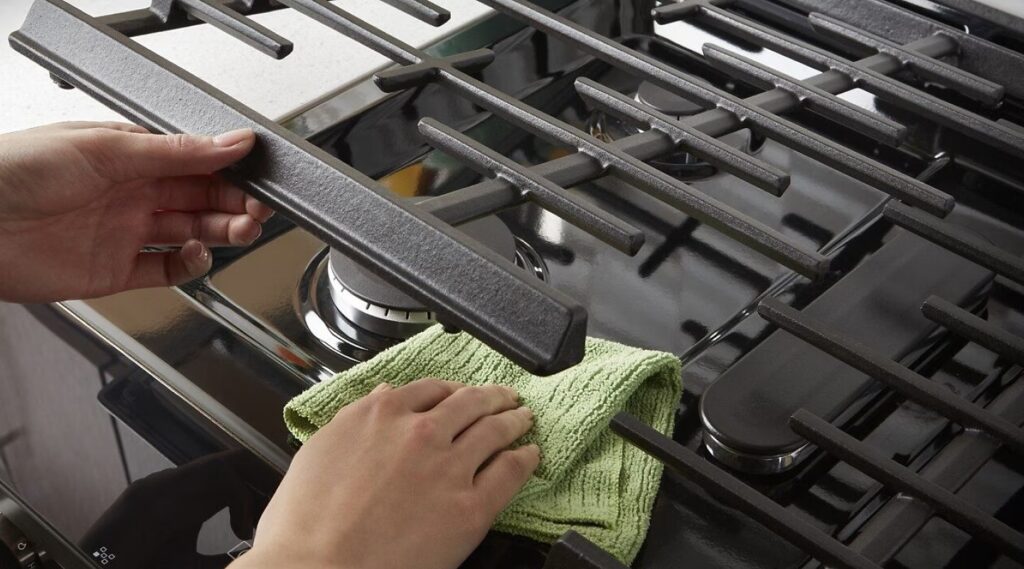
- Remove loose parts including the grates, burner caps and burner heads. Take a quick photo first so you remember how to reassemble everything.
CLEAN
- Soak grates and burner caps in warm, soapy water or a heavy-duty degreaser for at least 30 minutes to loosen baked-on grease.
- Clean the cooktop surface by vacuuming or wiping away large debris and loose crumbs. Scrub the surface using a non-scratch sponge and mild degreaser or dish soap. Avoid getting moisture or cleaning agents into the gas ignition ports.
- Scrub burner heads with an old toothbrush to gently remove debris such as food or grease. Avoid soaking the burners when cleaning.
- Inspect burner ports around the burner head for clogs. Use a paper clip or a needle to poke out any food or carbon buildup that could block the gas flow.
- Scrub the grates and caps that have been soaking.
- Let all components dry completely with a towel before replacing them. Check that each component is replaced and aligned correctly.
CHECK
- Reverse the shut-off valve to resume gas supply.
- Test each stovetop burner to ensure it ignites properly and produces a flame. A healthy gas flame should be blue. A yellow or orange flame signals a problem, which may require a professional adjustment.
Routine cleaning keeps your stovetop burners strong, your ignition steady and your cooking safe. With just a few minutes of work, you’ll have your stovetop ready to handle cooking for a crowd. Happy feasting!